
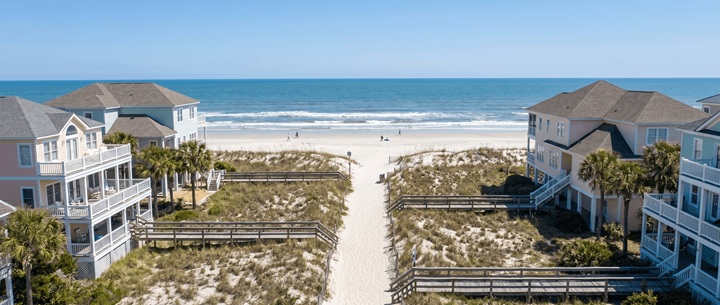
Analyzing Isle of Palms investment property cash flow requires looking beyond gross rental headlines to understand net cash-on-cash returns. On the Isle of Palms, the premium paid for a front-row designation along Palm Blvd does not always scale proportionally with weekly summer rental rates. Seasoned coastal property investors often notice that secondary positions near prime access points deliver superior per-dollar efficiency.
Understanding block-by-block dynamics reveals that the 30th Avenue corridor offers unique geographic advantages. For analytical second-home buyers, evaluating these asset classes side by side helps protect capital while maintaining an asset a family can enjoy.
The Best Fit Starts With How You'll Use the Area
Investors comparing these asset classes often notice that guest preferences shift depending on logistical realities. A family renting a home on 30th Avenue effortlessly crosses Palm Blvd at a designated crosswalk, hitting the sand in under two minutes. Meanwhile, deep oceanfront lots often mean a longer, hotter trek over protected dunes with a heavy beach wagon.
If your goal is balancing high summer business engines with private family retreats in the shoulder seasons, look closely at municipal access paths. Guests looking for Trip Planning resources prioritize immediate, predictable beach access without the premium price tag. Second-home shoppers tracking per-square-foot yields usually discover that proximity to the sand matters more than the front-row label.
This helps investors understand which location supports stronger seasonal demand per dollar spent.
Where This Choice Usually Makes the Most Sense
The decision framework below compares capital allocation strategies for buyers evaluating the Isle of Palms market.
| If This Sounds Like You | Best Fit | Why It Fits |
|---|---|---|
| Numbers-driven investor seeking maximum net cash-on-cash returns | Second-Row (30th Avenue Corridor) | Lower acquisition costs paired with competitive peak summer rental rates maximize yield. |
| Buyer looking to limit wind, hail, and salt-air maintenance overhead | Second-Row (Mid-Island Streets) | Physical shielding from direct onshore winds reduces structural wear and lowers insurance premiums. |
| High-net-worth buyer prioritizing unobstructed views over net yields | Oceanfront (Palm Blvd Front Row) | Unmatched prestige and direct beach access, though capital efficiency per dollar spent decreases. |
While oceanfront guests pay for the unobstructed view, second-row tenants frequently discover they enjoy greater privacy from passing beach traffic. Reviewing Vacation Rental Specials reveals that peak summer demand remains exceptionally resilient across both tiers.
This matters for buyers comparing upfront acquisition premiums with actual long-term maintenance realities.
The Local Reality That Changes the Decision
The practical difference shows up when you analyze the hidden operational friction of the immediate shoreline. Oceanfront homeowners frequently assess salt-crusted sliders after a standard spring northeaster, calculating the accelerated lifespan of their coastal finishes. Direct exposure to salt air, shifting sand, and coastal storms drives up structural depreciation.
Furthermore, astronomical wind, hail, and flood insurance premiums along Palm Blvd erode gross rental margins significantly. Second-row homes near 30th Avenue benefit from natural physical buffering, yet they sit directly across from designated public beach paths.
Traffic flow from the Isle of Palms Connector distributes summer visitors across the island grid, creating peak parking pressures. Second-row positions insulate owners from this public beach grid traffic while ensuring guests retain effortless walkability.
This benefits owners who want maximum privacy without sacrificing immediate beach access for their guests.
Why This Property or Area Choice Holds Up in Real Life
What surprises many investors is looking at a rental ledger and seeing a second-row property completely booked through August. During peak season, guest satisfaction is driven by daily convenience, such as walking to Acme Lowcountry Kitchen before the sand gets hot. Properties situated along the 30th Avenue corridor tend to benefit from this exact blend of lifestyle access and quiet neighborhood feel.
A secondary row positioning also reduces the hidden anxiety an investor feels when looking at a massive mortgage payment during active hurricane seasons. Over a multi-year hold, the lower initial capital outlay creates a more resilient cash-flow engine. Those considering transitioning an asset into the Long Term Rentals market during off-cycles find second-row utility highly attractive to residents.
This ensures your portfolio remains insulated from the extreme insurance volatility of the immediate shoreline.
Common Questions About Isle of Palms Investment Property Cash Flow
How does beach access affect Isle of Palms investment property cash flow on the second row?
Second-row properties located near established public access paths, like 30th Avenue, maintain high rental demand because guest walkability matches oceanfront convenience. Because acquisition costs are lower, the resulting net Isle of Palms investment property cash flow often yields a higher cap rate than premier front-row homes.
Do oceanfront homes always beat second-row properties for Isle of Palms investment property cash flow?
No, oceanfront homes do not automatically generate higher net cash flow. While front-row assets command higher gross weekly rates, their extreme insurance premiums, steep purchase premiums, and accelerated maintenance costs frequently lower the overall Isle of Palms investment property cash flow return percentage.
What maintenance costs impact Isle of Palms investment property cash flow along Palm Blvd?
Direct oceanfront exposure causes rapid salt-air corrosion on HVAC units, exterior decking, and structural hardware. Second-row homes are physically shielded from the harshest onshore winds, reducing seasonal maintenance expenses and preserving your net Isle of Palms investment property cash flow.
Where should I look for the best Isle of Palms investment property cash flow metrics?
Focus on the numbered avenues cluster near the 30th Avenue corridor. This specific mid-island zone balances easy pedestrian crossing paths over Palm Blvd with quieter rental dynamics, driving consistent multi-generational bookings and strong summer occupancy metrics without oceanfront overhead.
Maximizing your capital deployment on the Isle of Palms requires looking past aesthetics to evaluate true operational reality. If unobstructed, panoramic ocean views are your primary goal, the front row along Palm Blvd remains the gold standard. However, if optimizing net cash-on-cash efficiency and minimizing risk matters most, then a second-row property near 30th Avenue is the smarter fit.
To learn more about our team's deep historical market patterns, read About Us online. When you are ready for a granular look at localized asset performance, Contact Us to speak with a specialist.
 800.707.6421